Bitumen Emulsion: Types, Composition, Production, Applications & Storage

Bitumen Emulsion: Types, Composition, Production, Applications & Storage
دوشنبه، ۲۳ شهریور ۱۴۰۵
Bitumen Emulsion: Types, Composition, Production, Applications, and Storage
Bitumen is one of the most widely used binders in road construction and pavement maintenance. However, conventional bitumen has a relatively high viscosity and often needs to be heated or otherwise modified before it can be effectively handled and applied.
There are three main methods for reducing the viscosity of bitumen and making it suitable for practical applications:
Heating the bitumen
Dissolving the bitumen in a suitable petroleum solvent, producing Cutback Bitumen
Emulsifying the bitumen, producing Bitumen Emulsion
Among these methods, bitumen emulsification provides an effective way to use bitumen in a fluid form without relying on petroleum solvents and, in many applications, without extensive heating.
What Is Bitumen Emulsion?
Bitumen Emulsion is a two-phase system consisting primarily of bitumen, water, and an emulsifying agent. Depending on the intended application, other additives may also be incorporated to improve stability, adhesion, breaking characteristics, or other performance properties.
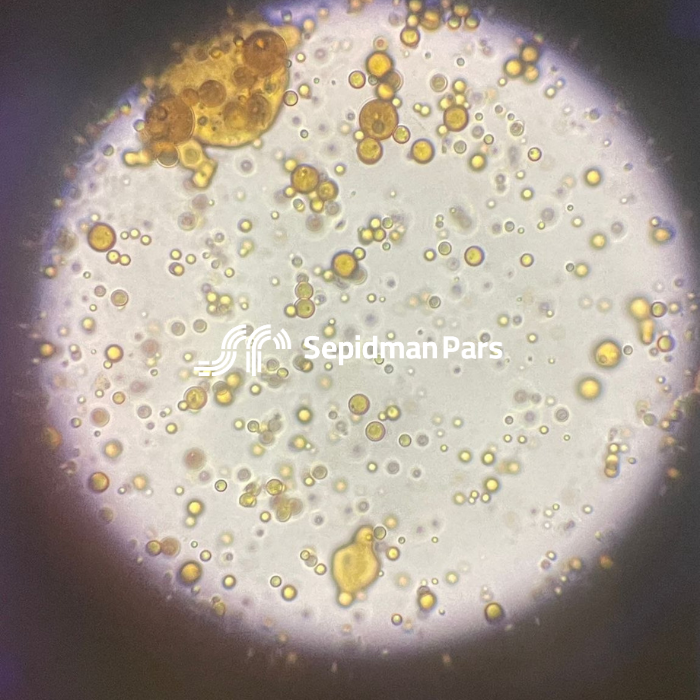
During production, bitumen is dispersed in water in the form of very small droplets, typically in the micrometer range. A colloid mill or high-shear homogenizing equipment is used to break the bitumen into fine particles and disperse them throughout the aqueous phase.
Because bitumen and water are naturally immiscible, the emulsion requires an emulsifying agent to remain sufficiently stable during storage, transportation, pumping, and application.
Without an emulsifier, the two incompatible phases tend to separate because the system naturally seeks to reduce the interfacial energy created by the contact between water and bitumen. The emulsifier helps stabilize the dispersed bitumen droplets and controls their interaction with the surrounding water.
Applications of Bitumen Emulsion
Bitumen emulsions are used in a wide range of road construction, pavement maintenance, and surface treatment applications.
Common applications include:
Cold asphalt mixtures
Surface treatments
Tack coats
Slurry seal
Pavement maintenance and repair
Surface sealing and protective treatments
Dust control
Stabilization of loose and moving sand
Certain protective coatings
Roof waterproofing and related applications
The appropriate type and grade of bitumen emulsion depends on the aggregate, project conditions, climate, construction method, required breaking time, and intended application.
History of Bitumen Emulsion
Bitumen emulsions emerged as a practical technology in the early 20th century. During the 1920s, their use in pavement construction became more widespread. One of their early applications was dust control.
The development of bitumen emulsions was initially relatively slow. Limited availability of different emulsion types and insufficient knowledge of how to properly select and apply them were among the factors restricting their adoption.
As new formulations were developed and road construction equipment and application techniques improved, the range of available applications expanded considerably.
From the 1930s through the mid-1950s, the use of bitumen emulsions increased gradually. After World War II, however, increasing traffic loads and pavement demands led engineers in many applications to rely more heavily on hot bituminous binders.
Over time, improvements in emulsion technology, equipment, and construction practices helped establish bitumen emulsion as an important material for pavement construction and maintenance.
Why Has the Use of Bitumen Emulsion Increased?
Several technical, economic, energy-related, and environmental factors have contributed to the wider use of bitumen emulsions.
1. Lower Energy Consumption
One of the main advantages of bitumen emulsion is that petroleum solvents are not required to reduce the viscosity of the bitumen.
In many applications, bitumen emulsion can also be applied without the extensive heating required for conventional hot bitumen. This can reduce energy consumption during handling and application.
The importance of this advantage became particularly evident during the energy crises of the 1970s, when the road construction industry paid greater attention to energy efficiency.
2. Reduced Environmental Impact
Unlike cutback bitumen, which relies on petroleum solvents to reduce viscosity, bitumen emulsion uses water as the primary medium.
As a result, the use of bitumen emulsion can reduce emissions associated with volatile petroleum solvents in applications where it replaces cutback products.
3. Ability to Coat Certain Damp Aggregates
Some bitumen emulsions can effectively coat aggregates that contain a certain amount of moisture.
This capability can reduce the need to use additional fuel to heat and dry aggregates before application, depending on the specific construction method and material conditions.
4. Availability of Different Formulations
Modern emulsion technology provides a wide range of formulations designed for different construction requirements.
Advances in laboratory testing, emulsifier chemistry, and production technology have made it possible to develop emulsions with controlled breaking characteristics, viscosity, stability, and aggregate compatibility.
Composition of Bitumen Emulsion
Bitumen emulsion primarily consists of three main components:
Bitumen
Water
Emulsifying Agent
Depending on the formulation and intended use, additional materials may also be incorporated, including:
Stabilizers
Adhesion or coating promoters
Anti-stripping agents
Breaking-control additives
Polymers and other performance modifiers
The formulation must remain sufficiently stable during pumping and storage, while also being capable of breaking at the appropriate time after contact with aggregates or the pavement surface.
In other words, a good bitumen emulsion needs to achieve a balance between storage stability and controlled breaking.
1. Bitumen
Bitumen is the primary binder in the emulsion and typically represents a significant proportion of the finished product.
The characteristics of the base bitumen can strongly influence the behavior and performance of the emulsion. However, there is no simple one-to-one relationship between the properties of a particular bitumen and its ability to form a stable emulsion.
The source of bitumen is crude oil, and its composition depends on the crude oil characteristics and refining conditions. Bitumen contains complex hydrocarbon molecules and other chemical compounds, and variations in these components can influence its physical and chemical properties.
Because of the complexity of bitumen chemistry, predicting its behavior during emulsification is not always straightforward. Therefore, consistent quality control during bitumen emulsion production is essential.
In many applications, bitumen emulsions are produced using paving-grade bitumens within an appropriate penetration range, although the exact base bitumen depends on climate, application, formulation, and performance requirements.
2. Water
Water is the second major component of bitumen emulsion and plays an important role in the stability and final performance of the product.
The quality of the water used in production is critical. Water may contain dissolved minerals, suspended particles, or other impurities that can interfere with the emulsification process.
Therefore, water suitable for producing a bitumen emulsion is not necessarily defined simply as drinking water. Its chemical composition and compatibility with the selected emulsifier must be considered.
Fine suspended particles and certain dissolved ions can interfere with emulsifier chemistry and destabilize the emulsion. Water quality can therefore influence:
Emulsion stability
Storage performance
Breaking characteristics
Compatibility with aggregates
Overall application performance
Effect of Calcium and Magnesium Ions
Calcium and magnesium ions can have different effects depending on the type of emulsion.
Certain calcium salts may be used to improve the storage stability of cationic emulsions. In contrast, calcium and magnesium ions can interfere with some anionic emulsion systems by reacting with water-soluble emulsifying compounds.
Carbonate and bicarbonate ions may also influence emulsion stability and should therefore be considered when evaluating water quality.
For this reason, water chemistry is an important part of bitumen emulsion formulation and quality control.
3. Emulsifying Agent
The emulsifying agent, or emulsifier, is one of the most important components of a bitumen emulsion.
It helps keep bitumen droplets dispersed in water and plays a major role in controlling the breaking behavior of the emulsion.
The type of emulsifier also determines whether the emulsion is classified as:
Cationic
Anionic
Nonionic
Historically, materials such as clay and soap were used as emulsifying agents. Modern emulsions use more sophisticated chemical systems designed to provide improved stability and controlled performance.
Anionic emulsifiers commonly include fatty-acid-based compounds, while many cationic emulsifiers are based on fatty amines and related chemical compounds.
For an emulsifier to function effectively, its surface-active portion must interact appropriately with both water and bitumen. This balance between hydrophilic and lipophilic characteristics allows the emulsifier to stabilize the dispersed bitumen droplets.
Classification of Bitumen Emulsion
Bitumen emulsions can be classified in several different ways, including according to:
The nature of the continuous and dispersed phases
The electrical charge of the dispersed bitumen droplets
The rate at which the emulsion breaks or sets
Classification by Phase Arrangement
Based on the phases involved, emulsions can generally be classified as:
Water-in-oil emulsions
Oil-in-water emulsions
For most conventional bitumen emulsions used in road construction, the bitumen is dispersed as droplets within the aqueous phase.
Classification by Electrical Charge
Bitumen emulsions are commonly classified into three groups according to the electrical charge associated with the bitumen droplets:
Anionic emulsions
Cationic emulsions
Nonionic emulsions
The first two categories have historically been the most widely used in road construction and pavement maintenance.
Anionic Bitumen Emulsion
In an anionic emulsion, the dispersed bitumen droplets carry a negative electrical charge.
When an electrical current is passed through an anionic bitumen emulsion, the negatively charged particles move toward the positive electrode, or anode.
Cationic Bitumen Emulsion
In a cationic emulsion, the bitumen droplets carry a positive electrical charge.
Under an electric field, positively charged bitumen particles move toward the negative electrode, or cathode.
Cationic emulsions are widely used in road construction because their charge characteristics can provide favorable interaction with many types of mineral aggregates.
Nonionic Bitumen Emulsion
In nonionic emulsions, the dispersed particles have no significant electrical charge and therefore do not preferentially move toward either electrode.
Although nonionic emulsions have more limited conventional road applications, they remain relevant to the development of emulsion technology.
Classification by Setting and Breaking Rate
Another important way to classify bitumen emulsions is according to the rate at which the emulsion breaks after application.
Common classifications include:
QS – Quick Setting
RS – Rapid Setting
MS – Medium Setting
SS – Slow Setting
The breaking rate determines how quickly the water separates from the bitumen and how rapidly the residual bitumen develops its bonding function.
Rapid-Setting Emulsions
Rapid-setting emulsions are designed to break relatively quickly after contact with suitable aggregates.
They are commonly associated with surface treatments where rapid setting is required.
Medium-Setting Emulsions
Medium-setting emulsions provide more working time than rapid-setting emulsions and can be suitable for applications involving coarser aggregates and certain asphalt mixtures.
Slow-Setting Emulsions
Slow-setting emulsions are designed to remain workable for a longer period.
They are particularly useful for applications involving fine aggregates or mixtures that require additional mixing and working time.
Quick-Setting Emulsions
Quick-setting emulsions are designed for applications where rapid breaking is required, particularly in specialized surface treatments and microsurfacing-related applications.
The actual breaking time depends on the formulation, aggregate characteristics, weather, moisture, temperature, and application conditions.
Understanding Bitumen Emulsion Grades and Naming
Bitumen emulsions are identified using combinations of letters and numbers that provide information about their classification and characteristics.
The letter C at the beginning of an emulsion designation generally indicates a cationic emulsion. When the C is absent, the designation may refer to an anionic emulsion under the relevant classification system.
For example:
RS-1 represents an anionic rapid-setting emulsion.
CRS-1 represents a cationic rapid-setting emulsion.
The number following the classification can indicate the viscosity grade within the applicable specification.
For example, MS-2 is generally more viscous than MS-1.
Additional letters may provide information about the base bitumen or special performance characteristics. For example, an h designation may indicate the use of a harder base bitumen in certain specifications.
Some anionic emulsion designations also use HF, referring to high-float characteristics that can provide improved coating of aggregates under specified conditions.
Examples of Bitumen Emulsion Grades
Common examples include:
Cationic emulsions:
CRS-1
CRS-2
CMS-2
CMS-2h
Anionic emulsions:
RS-1
HFRS-2
MS-2h
HFMS-2h
HFMS-2S
SS-1h
The exact meaning of individual designations should always be interpreted according to the applicable specification or standard, since grading systems may vary between standards and markets.
Polymer-Modified Bitumen Emulsions
Polymers can also be incorporated into bitumen emulsions to improve performance.
In some formulations, polymer modification can improve the performance of the residual binder, particularly at higher temperatures and under demanding traffic conditions.
Polymer-modified emulsions are used in applications such as microsurfacing, where improved performance and durability are required.
Modified emulsions may include additional letters such as L, P, or S in their designation, depending on the applicable specification and formulation.
The use of polymer-modified bitumen emulsions has created an important group of advanced emulsion products for pavement maintenance and surface treatment applications.
Factors Affecting Bitumen Emulsion Quality and Performance
Many factors influence the production, storage, stability, breaking behavior, and field performance of a bitumen emulsion.
The most important factors include:
Chemical properties of the base bitumen
Bitumen hardness and concentration
Bitumen droplet size
Type and concentration of emulsifier
Production temperature
Production pressure
Shear intensity
Electrical charge of the dispersed particles
Order in which components are added
Type and condition of production equipment
Chemical characteristics of the emulsifier
Water quality and hardness
Chemical modifiers and polymers
Aggregate characteristics
Temperature and humidity during application
Controlling these parameters is essential for producing a stable emulsion with predictable field performance.
How Is Bitumen Emulsion Produced?
The production of bitumen emulsion requires specialized equipment and carefully controlled operating conditions.
Main Equipment Used for Bitumen Emulsion Production
Typical equipment includes:
Colloid mill
Emulsifier solution tank
Hot bitumen tank
Pumps
Flow meters and measurement instruments
Storage tanks
Heating and temperature-control systems
The colloid mill is one of the most important pieces of equipment in the production process. It uses high-speed mechanical shear to break hot bitumen into very small droplets and disperse them throughout the aqueous phase.
The original source describes colloid mills operating at high rotational speeds, typically in the range of approximately 1,000–6,000 rpm, depending on equipment design and operating conditions.
Bitumen Emulsion Production Process
During production, hot bitumen is introduced into the colloid mill, where high shear breaks it into fine droplets.
At the same time, the aqueous phase containing the emulsifying agent is introduced into the mill.
The bitumen must be heated sufficiently to reduce its viscosity and allow effective dispersion. The temperature of the aqueous phase is also controlled according to the formulation and production requirements.
The optimum temperature depends on factors such as:
Base bitumen properties
Emulsifier chemistry
Compatibility between bitumen and emulsifier
Required droplet size
Production equipment
The process must be carefully controlled because excessive temperatures can cause water to approach its boiling point and negatively affect the emulsion.
After production, the finished emulsion is transferred to storage tanks. Depending on the formulation, tanks may be equipped with suitable mechanical agitation or circulation systems to maintain uniformity.
Importance of Bitumen Droplet Size
Droplet size is a critical factor in producing a stable bitumen emulsion.
The colloid mill creates microscopic bitumen droplets that are dispersed throughout the water. Surface-active molecules surround the droplets and modify the interfacial properties between bitumen and water.
The electrical charge associated with the droplets can also cause them to repel one another, helping prevent excessive aggregation and maintaining dispersion.
Therefore, control of droplet size and emulsifier concentration is fundamental to emulsion stability.
Breaking of Bitumen Emulsion
For bitumen emulsion to perform its function as a binder, the water must separate from the bitumen. This process is known as breaking.
Breaking occurs when the emulsion becomes unstable and the dispersed bitumen particles begin to coalesce, leaving behind the residual bitumen binder.
When an emulsion is applied to aggregates or a pavement surface, interaction with the mineral material and environmental conditions can initiate this process.
The breaking mechanism varies depending on the type of emulsion.
In rapid-setting emulsions, breaking can occur relatively quickly after application. Slow-setting emulsions are designed to remain workable for a longer period.
The original technical material notes that rapid-setting emulsions may break within only a few minutes under suitable conditions, whereas medium- and slow-setting systems require considerably more time.
What Controls the Breaking Time?
The type and concentration of the emulsifying agent are among the most important factors controlling breaking time.
However, breaking is also affected by:
Aggregate type
Aggregate surface chemistry
Aggregate moisture
Temperature
Humidity
Wind speed
Droplet characteristics
Emulsion temperature
Mechanical action
Application conditions
For successful field performance, the emulsion must be selected and formulated so that the breaking process occurs within the required working window.
Curing of Bitumen Emulsion
Curing refers to the development of the mechanical and bonding properties of the residual bitumen after the emulsion breaks.
As water leaves the system, the remaining bitumen forms a more continuous binder film around and between the aggregate particles.
For proper curing, water must be removed through processes such as:
Evaporation
Absorption into suitable materials
Mechanical action and rolling
Weather conditions have a major influence on curing.
High humidity, low temperatures, and rainfall immediately after application can slow the removal of water and delay curing.
On the other hand, warm and dry conditions generally promote faster water evaporation, although very hot conditions can sometimes create a surface skin that traps water underneath and delays complete curing.
Factors Affecting Breaking and Curing
Several factors influence how quickly a bitumen emulsion breaks and cures.
Aggregate Absorption
Aggregates with greater void content and rougher surfaces can absorb water from the emulsion and accelerate breaking.
Aggregate Moisture
Moist aggregates may improve initial coating in certain applications, but higher moisture content can also increase the time required for water to evaporate and therefore delay curing.
Weather Conditions
Temperature, relative humidity, and wind speed all influence water evaporation and the movement of emulsifying agents.
Warm conditions generally accelerate breaking, but the relationship is not always straightforward because rapid surface drying can sometimes create a skin that slows curing underneath.
Mechanical Action
Rolling and, in some cases, slow-moving traffic can help remove water from the mixture and contribute to bonding, curing, and stability.
Aggregate Surface Area
A greater surface area, particularly in fine or dusty aggregates, can affect the breaking behavior of the emulsion.
Surface Chemistry
The electrical characteristics and chemical composition of aggregate surfaces can significantly influence emulsion behavior, particularly with cationic and anionic systems.
Calcium and magnesium ions on aggregate surfaces can interact with certain emulsifiers and affect breaking and setting behavior.
Emulsion and Aggregate Temperature
Low temperatures can delay breaking, particularly in applications such as microsurfacing.
Type and Amount of Emulsifier
The emulsifier is a key factor in determining the breaking characteristics of the emulsion and must be selected according to the intended application.
Storage of Bitumen Emulsion
Proper storage is essential for maintaining the stability and performance of bitumen emulsion.
Improper storage conditions can cause premature breaking, separation, skin formation, or other changes that make the product unsuitable for use.
Important Bitumen Emulsion Storage Guidelines
Maintain an Appropriate Temperature
Storage temperature should be selected according to the specific emulsion type and application.
The source material indicates a general water-temperature range of approximately 10°C to 85°C, while emphasizing that the emulsion itself should not be heated above approximately 85°C.
Prevent Freezing
Bitumen emulsion should never be allowed to freeze.
Freezing can destabilize the emulsion and cause separation of the bitumen and water, potentially resulting in two distinct layers in the storage tank.
Avoid Excessive Heating
Excessive temperatures can cause water to vaporize and change the properties of the emulsion.
Heating surfaces should also be carefully controlled because excessive localized temperatures can cause premature breaking.
Avoid Compressed-Air Agitation
Compressed air should not normally be used to mix or agitate bitumen emulsion because excessive aeration and mechanical disturbance can promote breaking.
Use Suitable Storage Tanks
Storage tanks should be designed to protect the emulsion from freezing and excessive heat loss.
Vertical tanks can help minimize the surface area exposed to air and reduce the formation of a bitumen skin on the surface.
Where appropriate, low-speed mechanical agitators or controlled circulation systems can be used to maintain uniformity.
However, excessive mixing or pumping should be avoided because excessive mechanical action can affect emulsion stability.
Handling Bitumen Emulsion
Proper handling practices are just as important as storage conditions.
Key recommendations include:
Handle the emulsion gently during heating and circulation.
Protect pumps, valves, and pipelines against freezing during cold weather.
Check the compatibility of water before dilution or mixing.
When dilution is permitted, add water gradually and under controlled conditions.
Avoid repeated or excessive pumping.
Where appropriate, withdraw material from the lower part of the storage tank to minimize contamination from any surface skin.
Do not mix different emulsion grades or classifications in the same tank unless their compatibility has been specifically confirmed.
Do not dilute rapid-setting emulsions with water unless the applicable product specification explicitly permits it.
Slow-setting and certain other emulsions may be diluted under controlled conditions, but water should be added gradually.
Ensure that transport tanks and distributors are free from incompatible residues before loading.
Provide adequate ventilation and keep the material away from unsuitable heat sources and strong oxidizing agents.
Different emulsions may have significantly different chemical and performance characteristics even when they appear similar. Therefore, product specifications and technical data should always be checked before mixing, dilution, storage, or application.
Applications of Bitumen Emulsion in Road Construction
Bitumen emulsions can be used in a broad range of pavement construction, maintenance, and surface treatment operations.
Important applications include:
Hot asphalt mixtures
Cold asphalt mixtures
In-place asphalt mixtures
Protective and sealing treatments
Single surface treatments
Multiple surface treatments
Aggregate seal coats
Sand seals
Dense and open-graded penetration macadam
Bitumen spraying operations
Non-aggregate surface treatments
Surface treatments
Dust control
Sand stabilization and mulch applications
Crack filling
Routine and emergency pavement repairs and patching
The suitability of an emulsion depends on the specific application and should be determined based on the required breaking rate, aggregate characteristics, climate, traffic conditions, and applicable specifications.
Advantages of Bitumen Emulsion
The main advantages of bitumen emulsion can be summarized as follows:
Reduced dependence on petroleum solvents
Lower heating requirements in many applications
Potential energy savings
Reduced emissions associated with volatile solvents
Ability to work with certain damp aggregates
Wide range of formulations and grades
Suitable for many pavement maintenance applications
Good adaptability to different aggregate types and construction methods
Availability of polymer-modified formulations for demanding applications
These advantages have helped bitumen emulsion become an important alternative to conventional hot bitumen and, in some applications, cutback bitumen.
Bitumen Emulsion vs. Cutback Bitumen
Although both materials reduce the practical viscosity of bitumen, they use fundamentally different approaches.
Bitumen emulsion disperses bitumen droplets in water with the help of an emulsifier.
Cutback bitumen reduces viscosity by blending bitumen with a petroleum solvent.
This distinction has important implications for energy consumption, solvent emissions, storage, handling, and application.
For many applications, bitumen emulsions can provide an alternative to cutback products where reducing petroleum-solvent use is a priority.
Choosing the Right Bitumen Emulsion
Selecting the appropriate bitumen emulsion should not be based only on the product name or grade.
Important selection factors include:
Type of pavement treatment
Aggregate type and gradation
Aggregate surface chemistry
Aggregate moisture
Required breaking rate
Ambient temperature
Humidity
Traffic conditions
Required curing time
Storage conditions
Application equipment
Applicable national or international specifications
The correct emulsion should provide enough working time for mixing or application while breaking and curing within the required period.
Conclusion
Bitumen emulsion is a versatile bituminous binder produced by dispersing fine bitumen droplets in water with the help of an emulsifying agent.
Its ability to provide workable bitumen at relatively low temperatures, without relying on petroleum solvents, has made it an important material for road construction, pavement maintenance, surface treatments, cold asphalt mixtures, tack coats, slurry seals, microsurfacing, and other infrastructure applications.
The performance of a bitumen emulsion depends on much more than the bitumen itself. Water quality, emulsifier chemistry, droplet size, electrical charge, production conditions, aggregate characteristics, weather, breaking behavior, curing, and storage conditions all contribute to the final performance of the product.
For this reason, selecting the appropriate emulsion grade and maintaining proper production, storage, and application practices are essential for achieving consistent and reliable results.
You May Also Find These Articles Helpful
What Is Cutback Bitumen? Types, Grades, Applications, and Differences
Bitumen Grades: Types, Classification, Properties, and Applications
Penetration Grade Bitumen: Classification, Properties, Applications & Specifications
Performance Grade (PG) Bitumen: Classification, Properties, Applications, and Advantages
How Is Bitumen Produced? A Complete Guide to the Bitumen Manufacturing Process