Asphalt Rutting

Asphalt Rutting
دوشنبه، ۲۰ مهر ۱۴۰۵
What Is Asphalt Rutting? Causes, Prevention Methods, and the Role of Polymer-Modified Bitumen
Asphalt rutting is one of the most common forms of permanent deformation in flexible pavements. It appears as longitudinal depressions along vehicle wheel paths and can reduce road safety, driving comfort, and pavement service life. Rutting is particularly problematic on highways, roads carrying heavy traffic, intersections, bus stops, and pavements exposed to high temperatures.
Although rutting is often associated with the softening of asphalt binder, its causes can also include poor mixture design, inadequate compaction, excessive traffic loading, and weaknesses in the underlying pavement layers. Understanding these factors is essential for selecting the right prevention and maintenance strategy.
In this article, we explain what asphalt rutting is, why it occurs, how it can be prevented, and how polymer-modified bitumen can help improve asphalt pavement resistance to permanent deformation.
What Is Asphalt Rutting?
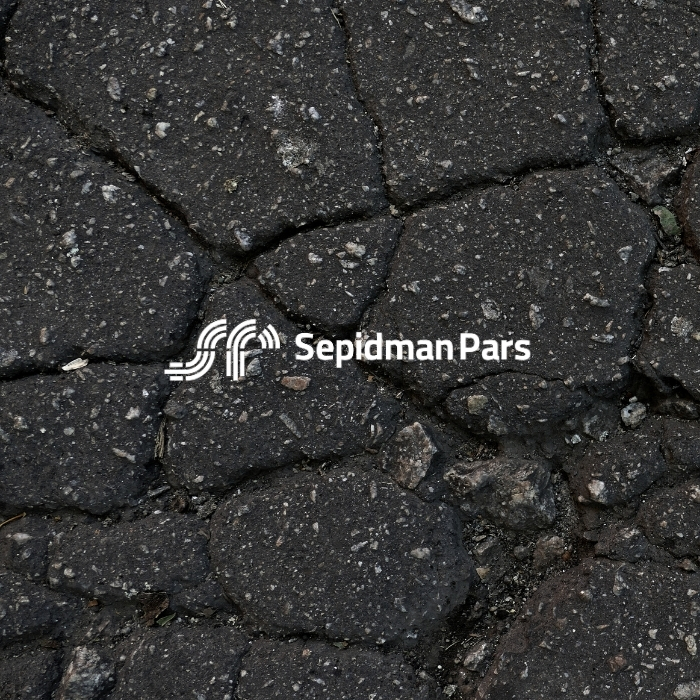
Asphalt rutting is the formation of permanent depressions in the pavement surface, usually along the paths followed by vehicle tires. It develops when repeated traffic loads cause the asphalt mixture or underlying pavement layers to deform and fail to recover their original shape.
Unlike temporary deformation, which disappears after a load is removed, rutting leaves a lasting depression in the road surface. Over time, these depressions can become deeper and more pronounced, especially under heavy traffic and high pavement temperatures.
Rutting can occur within the asphalt layers themselves or in the underlying base, subbase, and subgrade. Identifying the location and mechanism of deformation is important because a surface-level repair may not solve a problem originating in the pavement foundation.
Main Causes of Asphalt Rutting
Several factors can contribute to rutting. In many cases, the problem results from a combination of material properties, construction practices, traffic conditions, and pavement structure.
1. High Pavement Temperatures
Bitumen is a temperature-sensitive material. As pavement temperature rises, conventional bitumen generally becomes softer and less resistant to deformation. When heavy vehicles repeatedly travel over a hot pavement, the asphalt mixture may gradually move or deform under the applied loads.
This is one reason rutting can be especially challenging in regions with hot summers, high solar radiation, and heavy truck traffic.
2. Heavy Traffic and Repeated Wheel Loads
Every vehicle applies stress to the pavement. Heavy trucks and other high-axle-load vehicles can produce substantially greater stresses than passenger cars. When these loads are repeated over time, they can cause permanent deformation in the asphalt mixture or underlying layers.
Rutting is particularly likely in areas where vehicles frequently stop, accelerate, or turn, such as intersections, roundabouts, toll plazas, and bus stops. These movements can introduce additional shear stresses into the pavement.
3. Improper Asphalt Mixture Design
The performance of an asphalt mixture depends on the interaction between bitumen, aggregates, mineral filler, and air voids. An unsuitable combination of these components can reduce the mixture’s resistance to permanent deformation.
Potential problems include:
Excessive binder content, which may make the mixture too susceptible to deformation.
Inadequate aggregate interlock or an unsuitable aggregate gradation.
Insufficiently angular or poorly selected aggregates.
An inappropriate balance between binder properties and mixture structure.
Air-void content outside the specified design range.
A well-designed asphalt mixture must provide sufficient cohesion from the binder while maintaining a stable aggregate skeleton capable of resisting traffic-induced stresses.
4. Inadequate Compaction During Construction
Compaction is essential for achieving the required density and stability of asphalt pavement. If an asphalt layer is insufficiently compacted during construction, traffic may continue to densify the mixture after the road opens.
This additional densification can contribute to rut formation. Construction temperature, rolling patterns, equipment selection, and compliance with specified density requirements all influence the final pavement performance.
5. Weak Base, Subbase, or Subgrade
Not all rutting originates in the asphalt layer. If the underlying base, subbase, or soil subgrade lacks adequate strength or has not been properly prepared, repeated traffic loads may cause deformation beneath the asphalt surface.
In these cases, simply applying a new asphalt overlay may not provide a durable solution. The pavement structure must be investigated to determine whether drainage, compaction, material quality, or structural capacity is responsible for the problem.
Types of Asphalt Rutting
Understanding the type of rutting helps engineers identify the likely cause and choose an appropriate treatment.
1. Mix Rutting
Mix rutting occurs within the asphalt layers because the mixture cannot adequately resist repeated traffic stresses. It may be associated with unsuitable binder properties, poor aggregate interlock, excessive binder content, or an inadequate mixture design.
Improving mixture stability and selecting a suitable binder are important measures for reducing this type of deformation.
2. Subgrade Rutting
Subgrade rutting develops when the soil beneath the pavement deforms under repeated loading. The resulting depression can extend through the pavement structure and appear at the road surface.
The solution may require improvements to the subgrade, better drainage, stronger pavement layers, or a combination of structural measures.
3. Densification Rutting
Densification rutting occurs when an asphalt mixture continues to compact under traffic after construction. It is commonly associated with insufficient initial compaction or an unsuitable air-void structure.
Meeting construction specifications and verifying field density can help reduce the risk.
How Can Asphalt Rutting Be Prevented?
Preventing rutting requires a pavement design and construction strategy that considers traffic loads, temperature, materials, and structural conditions together. No single material can compensate for every design or construction deficiency.
1. Use a Properly Designed Asphalt Mixture
The mixture should be designed for the expected traffic volume, axle loads, climate, and pavement layer. Aggregate gradation, particle shape, binder content, and air voids should be controlled according to the applicable specifications.
A stable aggregate skeleton is particularly important because it helps the mixture resist shear deformation under repeated wheel loads.
2. Select the Appropriate Bitumen Grade
The binder should be suitable for the pavement’s expected service temperatures and traffic conditions. A binder that is too soft for a hot climate or heavy traffic may contribute to deformation, while an excessively stiff binder can create other performance concerns, including cracking under certain conditions.
Performance-based binder selection can help engineers balance high-temperature rutting resistance with the required low-temperature and fatigue performance.
For more information, see our article on Performance Grade (PG) Bitumen.
3. Ensure Proper Construction and Compaction
Even a well-designed asphalt mixture can perform poorly if construction practices are inadequate. Asphalt must be produced, transported, placed, and compacted within the specified temperature and quality-control requirements.
Field density checks, temperature monitoring, and appropriate rolling procedures can help ensure that the constructed pavement achieves its intended properties.
4. Improve Pavement Drainage and Structural Capacity
Drainage problems can weaken unbound pavement layers and soil subgrades. Where rutting is associated with underlying structural deficiencies, engineers should assess moisture conditions, layer thicknesses, material strength, and subgrade performance.
The treatment should address the actual cause rather than only correcting the visible surface deformation.
5. Consider Polymer-Modified Bitumen
Polymer-modified bitumen can improve the high-temperature stiffness and elastic recovery of the binder, depending on the polymer type, formulation, and modification process. These properties can help an asphalt mixture resist permanent deformation under repeated loading.
However, the performance improvement depends on the complete mixture design, aggregate structure, binder compatibility, production quality, and construction practices. Polymer modification should therefore be considered part of an integrated pavement engineering solution rather than a substitute for proper design and construction.
The Role of Polymer-Modified Bitumen in Rutting Resistance
Polymer-modified bitumen (PMB) is produced by incorporating selected polymers into bitumen to modify its performance characteristics. Depending on the formulation, polymer modification can improve elasticity, reduce temperature susceptibility, and enhance resistance to permanent deformation at elevated temperatures.
One commonly used modifier is styrene-butadiene-styrene (SBS), a thermoplastic elastomer used in asphalt applications to improve binder elasticity and pavement performance.
How Does Polymer Modification Help?
Polymer-modified bitumen may help reduce rutting through several mechanisms:
Improved high-temperature performance: A suitable formulation can help the binder maintain its structural properties under elevated pavement temperatures.
Greater elastic recovery: Depending on the polymer system, the binder may recover more effectively after loading.
Reduced susceptibility to permanent deformation: Improved binder rheology can contribute to better rutting resistance when combined with a stable asphalt mixture.
Potentially improved overall pavement durability: Appropriate polymer modification may also improve other performance characteristics, although the results depend on the formulation and project conditions.
The extent of improvement should be verified through laboratory testing and, where appropriate, field performance evaluation.
Why Is SBS-Modified Bitumen Used?
SBS-modified bitumen is widely used in applications where a combination of elasticity and improved high-temperature performance is required. It may be suitable for heavily trafficked roads, highways, intersections, and other locations exposed to demanding service conditions.
The appropriate SBS content and binder formulation depend on the base bitumen, polymer characteristics, processing conditions, required specifications, and intended application. Higher polymer content does not automatically guarantee better performance; formulation and quality control remain essential.
For a broader overview, read our article on SBS and Polymer-Modified Bitumen.
How Is Rutting Resistance Evaluated?
Laboratory testing helps engineers compare binders and asphalt mixtures before selecting materials for a project. The appropriate test depends on whether the objective is to evaluate the binder itself, the complete asphalt mixture, or the pavement structure.
Common approaches include:
1. Multiple Stress Creep Recovery (MSCR) Test
The MSCR test evaluates the response of an asphalt binder to repeated loading and recovery at a specified temperature. It provides information about non-recoverable creep compliance and elastic recovery, which can help assess binder performance under traffic-related stresses.
2. Wheel Tracking Test
Wheel tracking tests evaluate the permanent deformation of an asphalt mixture under repeated wheel loading at a controlled temperature. The results can be used to compare the rutting susceptibility of different mixture designs.
3. Binder Rheological Testing
Rheological tests, including measurements using a Dynamic Shear Rheometer (DSR), help characterize binder behavior under specified temperature and loading conditions. These results can contribute to performance-based binder evaluation.
4. Field Investigation
When rutting has already occurred, engineers should assess rut depth, pavement profile, layer condition, drainage, and possible deformation in the underlying structure. Core sampling and other diagnostic methods may be necessary to identify the actual cause.
No single test fully predicts field performance. A reliable assessment combines material testing, mixture design, construction quality control, and consideration of the project’s traffic and climate.
Repairing Existing Asphalt Rutting
The appropriate repair method depends on the depth, extent, and cause of rutting.
For relatively shallow surface deformation, milling and resurfacing or other localized corrective treatments may be appropriate, depending on project specifications. Deeper rutting caused by unstable asphalt layers or structural deficiencies may require more extensive rehabilitation.
Before choosing a treatment, engineers should determine whether the deformation is confined to the surface asphalt or extends into the lower pavement layers. If the underlying cause is not addressed, rutting may return even after a new surface layer is installed.
Why Choose Sepidman Pars Polymer-Modified Bitumen?
Selecting the right bitumen is an important part of designing asphalt pavements for demanding traffic and climatic conditions. Sepidman Pars focuses on polymer-modified bitumen solutions for road construction applications.
The appropriate binder should be selected based on project requirements, including traffic loading, service temperatures, applicable technical specifications, and the desired balance of rutting, cracking, and durability performance.
For project-specific guidance, the Sepidman Pars team can help evaluate the relevant technical requirements and identify a suitable polymer-modified bitumen option.
Conclusion
Asphalt rutting is a complex pavement distress that can result from high temperatures, heavy traffic, unsuitable mixture design, inadequate compaction, or weakness in the underlying pavement structure.
Effective prevention starts with identifying the likely cause and combining appropriate binder selection, stable aggregate gradation,
You May Also Find These Articles Helpful
What Is Bitumen? Structure, Properties, and Applications of This Essential Material
Properties of Bitumen: Physical and Chemical Characteristics of Bitumen in Road Construction
Bitumen Structure: Chemical Composition and Main Components of Bitumen
How Is Bitumen Produced? | A Complete Guide to the Bitumen Manufacturing Process
Modified Bitumen: Definition, Types, Benefits, and Applications
Polymer Modified Bitumen (PMB): Types, Advantages, Applications, and Manufacturing Process